

News

Open Care supports Cascina Monluè as a heritage asset to be preserved and enhanced, reaffirming its commitment to socially and culturally significant initiatives for the local community, also through the promotion of the Art Bonus scheme.
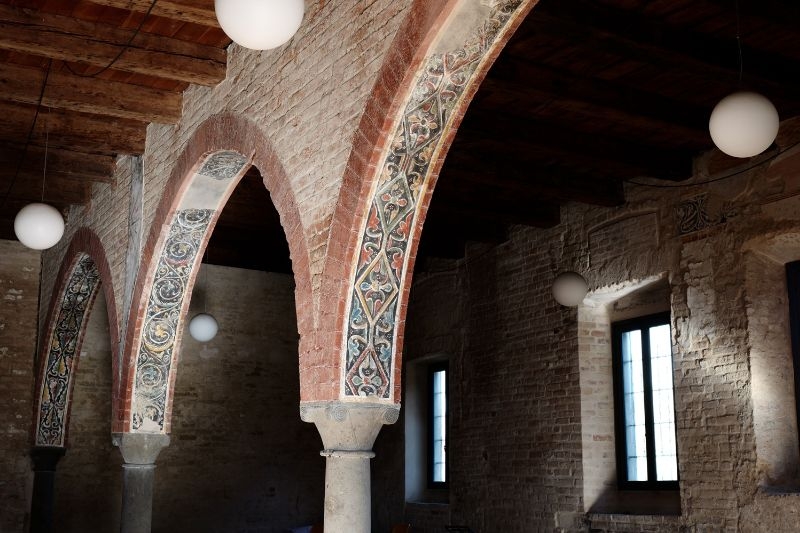
Of very ancient origins—its name derives from Mons luparium, meaning “mountain of wolves”—Cascina Monluè was established in 1267 as a monastic grange founded by the Humiliati of Santa Maria di Brera. The complex, made up of religious buildings and rural farm structures arranged around a closed courtyard and surrounded by irrigated meadows and cultivated fields, still represents one of the best surviving examples of this settlement model.
Following the dissolution of the Humiliati order in 1571, promoted by Saint Charles Borromeo, the hamlet passed through various owners until it became part of the Pio Albergo Trivulzio estate in the early 20th century. After the Second World War, the area gradually became depopulated due to its isolation and agricultural vocation, only to be revitalised in recent decades—up until 2009—as a social hub hosting events, festivals, and concerts. Despite these transformations, its original layout remains clearly recognisable.
Today, Cascina Monluè is at the centre of a major urban regeneration and restoration project that also includes the conservation of its historic and artistic elements, such as the frescoes within the complex. Given its location within the Parco Agricolo Sud Milano, it is part of the “Strada delle Abbazie”, an itinerary that connects the historical and landscape heritage of the south-eastern area of Milan.
The farmhouse is thus entering a new phase in its history: not only a site to be preserved, but a place to be lived in and enhanced—open to the city and designed to host social, cultural, and community-based activities.