

Conservation Treatment of the Tapestry The Battle of the Milvian Bridge – Museo Diocesano, Milan
 1-(1)
 3-(1) 1
 3-(2) 1
 8-(1)
 8-(3)
 9-(1)
 9-(2)
 12-(1)
 14-(4)
 109 arazzo
WORK
Tapestry The Battle of the Milvian Bridge
ARTIST
Geraert van der Strecken (Brussels, c. 1615–1677) and Willem van Leefdael (Brussels, 1632–1688), after cartoons by Abraham van Diepenbeeck (‘s-Hertogenbosch, 1596 – Antwerp, 1675)
DATE
1656-1677
TECHNICAL DESCRIPTION
Weft: wool, 13 picks/cm; silk, 15 picks/cm
Warp: wool, 8/cm
Dimensions: 319 x 335 cm
owner
Fondazione Sant'Ambrogio. Museo Diocesano, Milan
Project Period
April – October 2012
Tapestry "The Battle of the Milvian Bridge" | Museo Diocesano, Milan
The Tapestry and Textile Conservation and Restoration Laboratory carried out the conservation treatment of the tapestry The Battle of the Milvian Bridge from the Museo Diocesano in Milan, in view of the exhibition Costantino 313 d.C. (“Constantine 313 AD”), curated by Paolo Biscottini and Gemma Sena Chiesa and held at Palazzo Reale in Milan (25 October 2012 to 17 March 2013). The exhibition was an initiative of the Museo Diocesano di Milano to celebrate the anniversary of the Edict of Constantine.
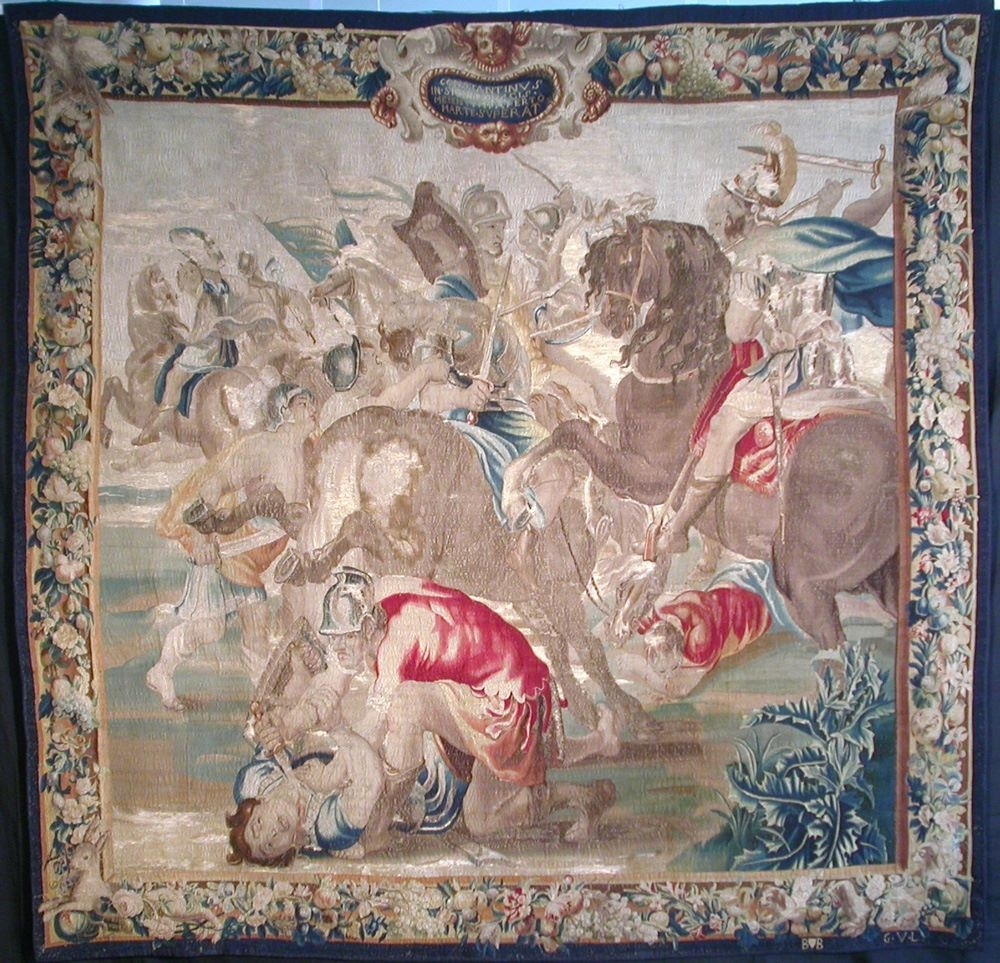
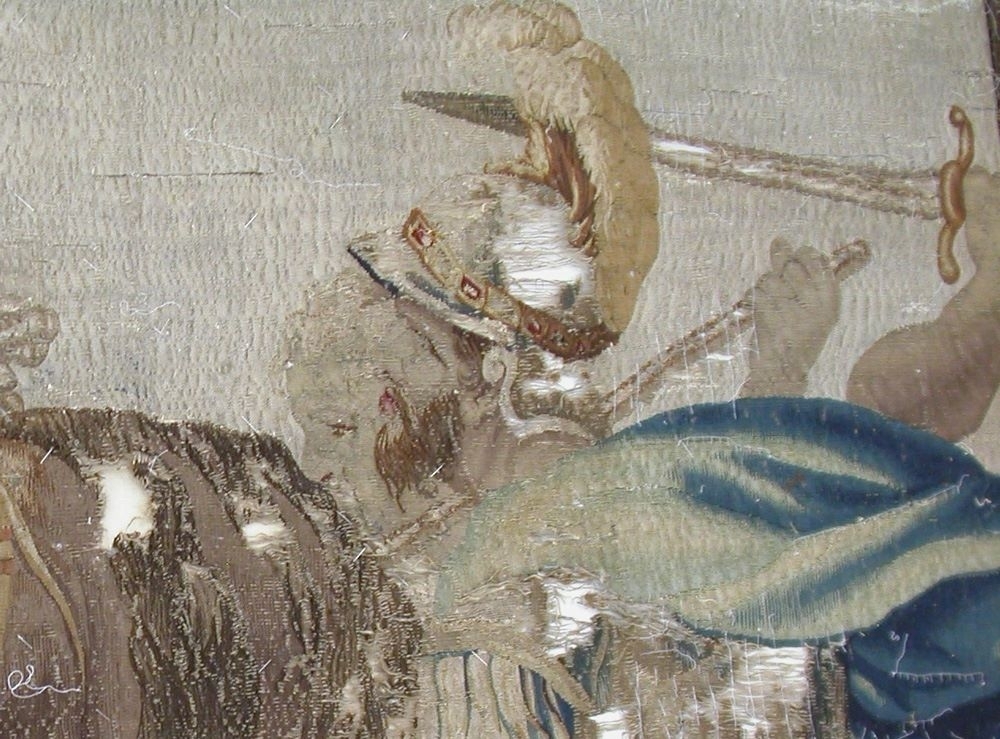
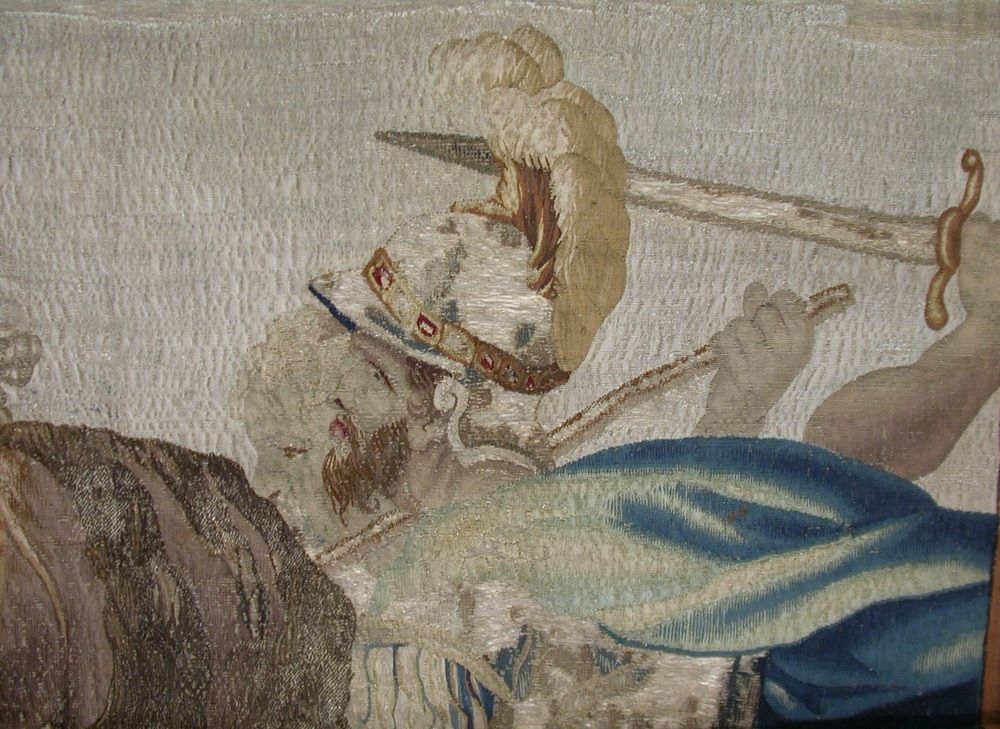
The Battle of the Milvian Bridge (330 x 318 cm) celebrates Constantine’s victory at Saxa Rubra, at the gates of Rome, on 28 October 312. As the caption woven into the tapestry recalls, legend has it that, following a vision the day before the battle, Constantine won in part because he had adopted the cross as the emblem of his army. The scene depicts a phase of the fierce battle: Constantine is mounted on a rearing horse, with his sword in his right hand; in front of him a soldier unseats a horseman while the horse twists its neck and kicks with its hind legs; in the foreground a kneeling soldier stabs an enemy in the throat.
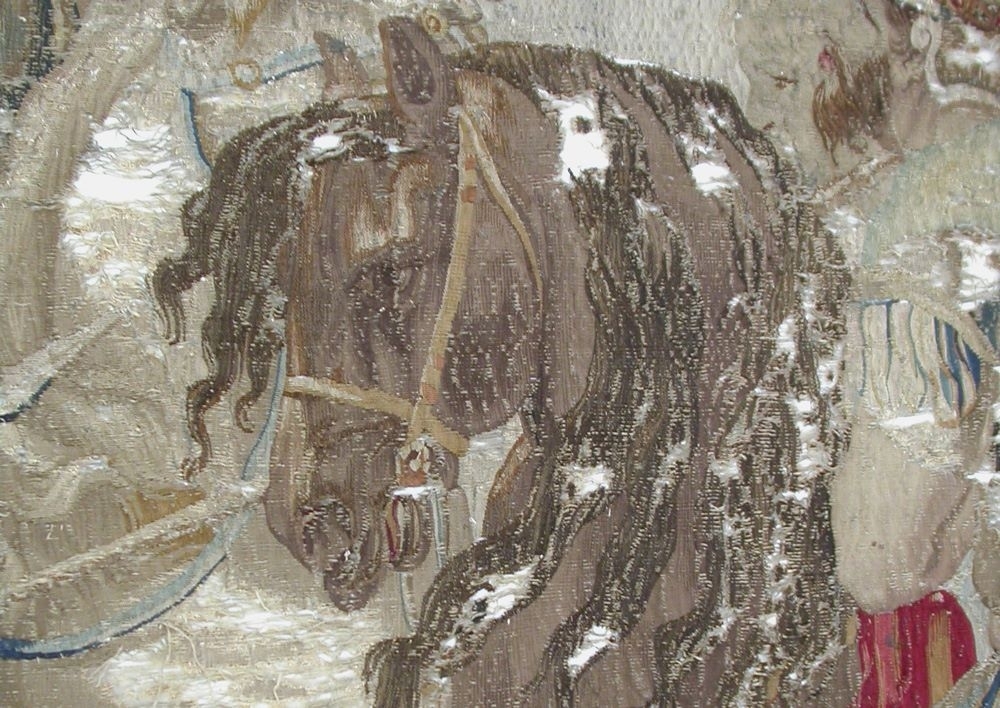
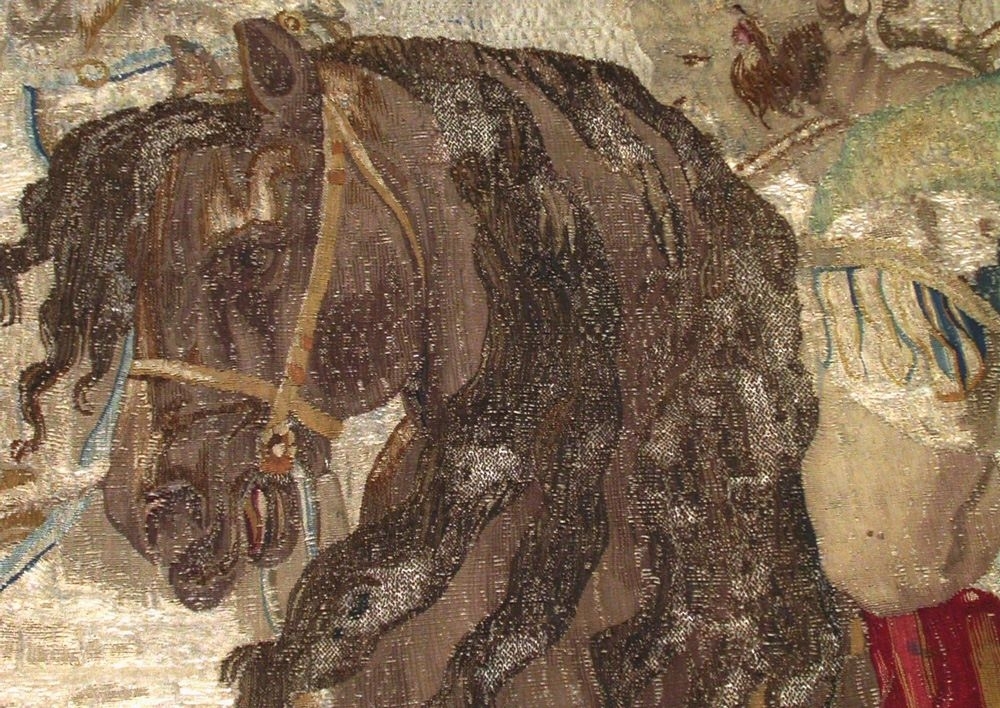
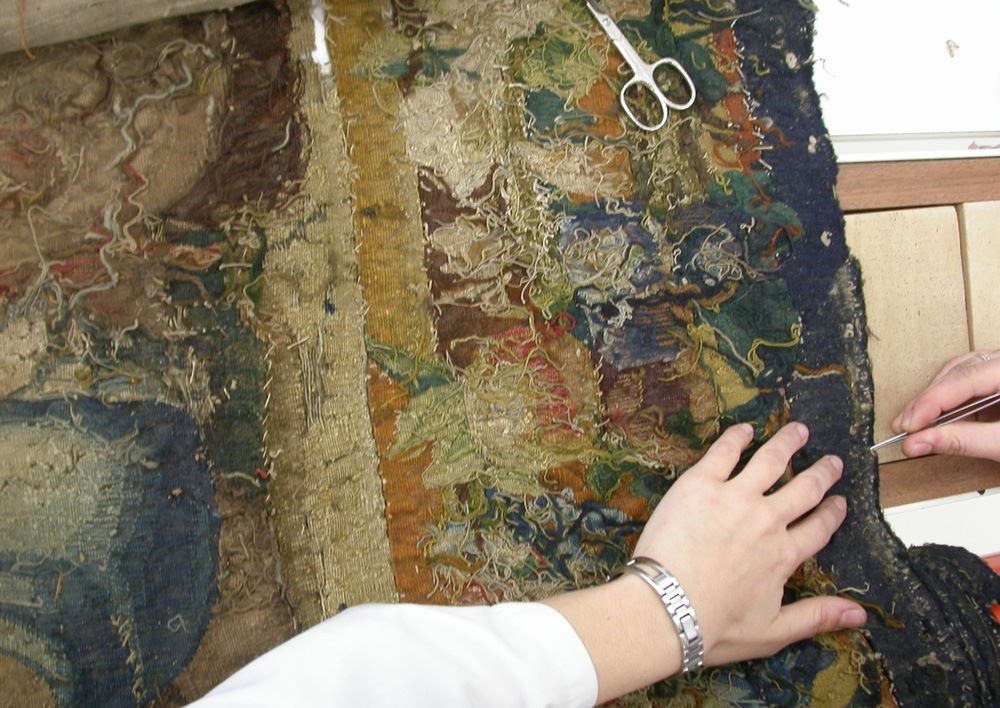
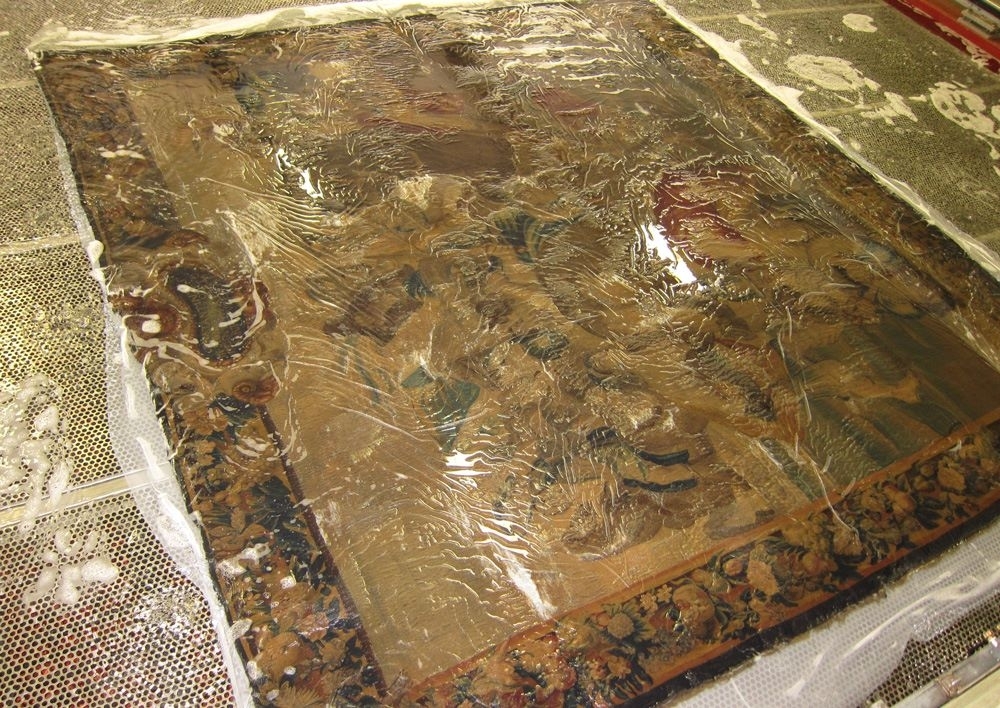
Before restoration, the state of conservation was severely compromised: extensive and widespread gaufrage (embossing) effects, a significant deposit of dust over the entire surface, detachments of the weave and earlier interventions (such as the one from 1927, whose signature was found on a sheet of paper sewn into the lining) made it almost completely illegible. There were also numerous, extensive losses affecting both the areas with silk weft and those with wool weft.
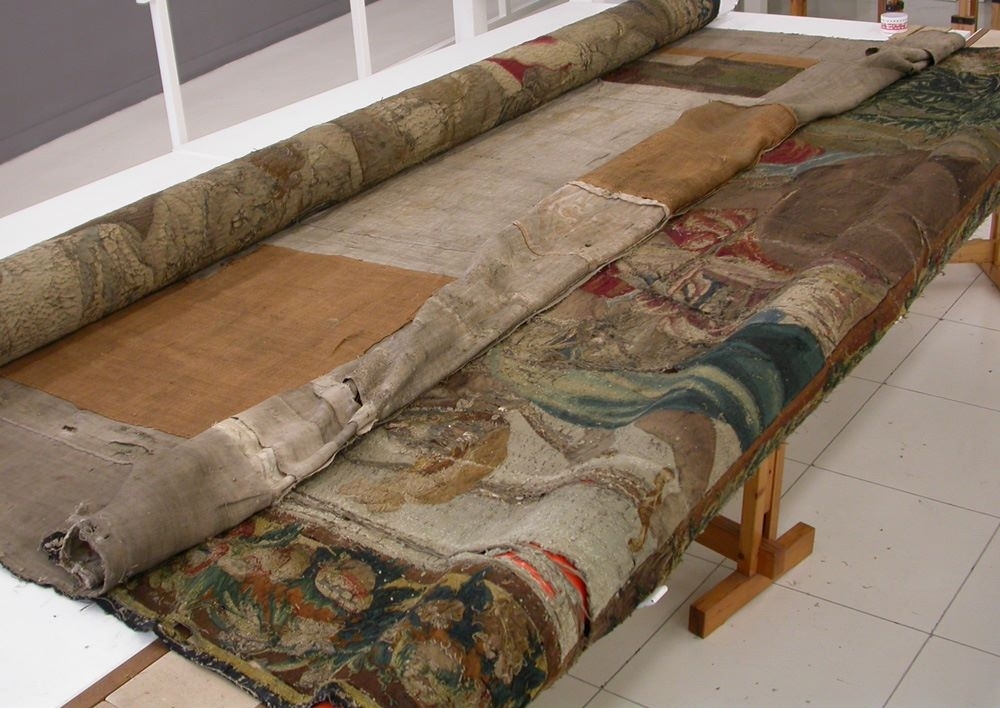
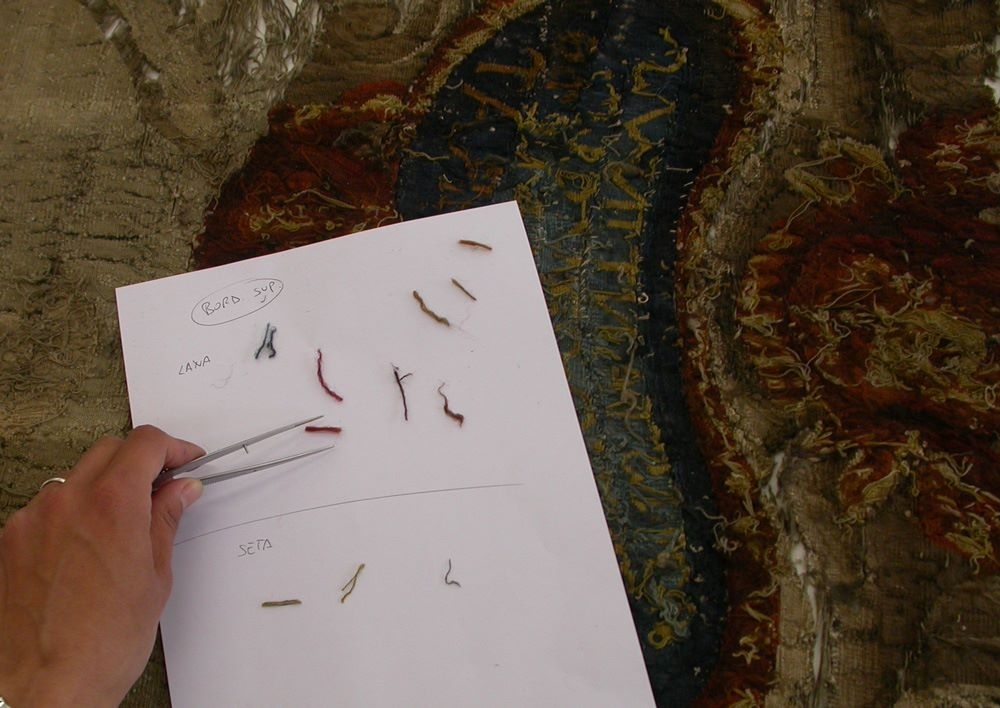
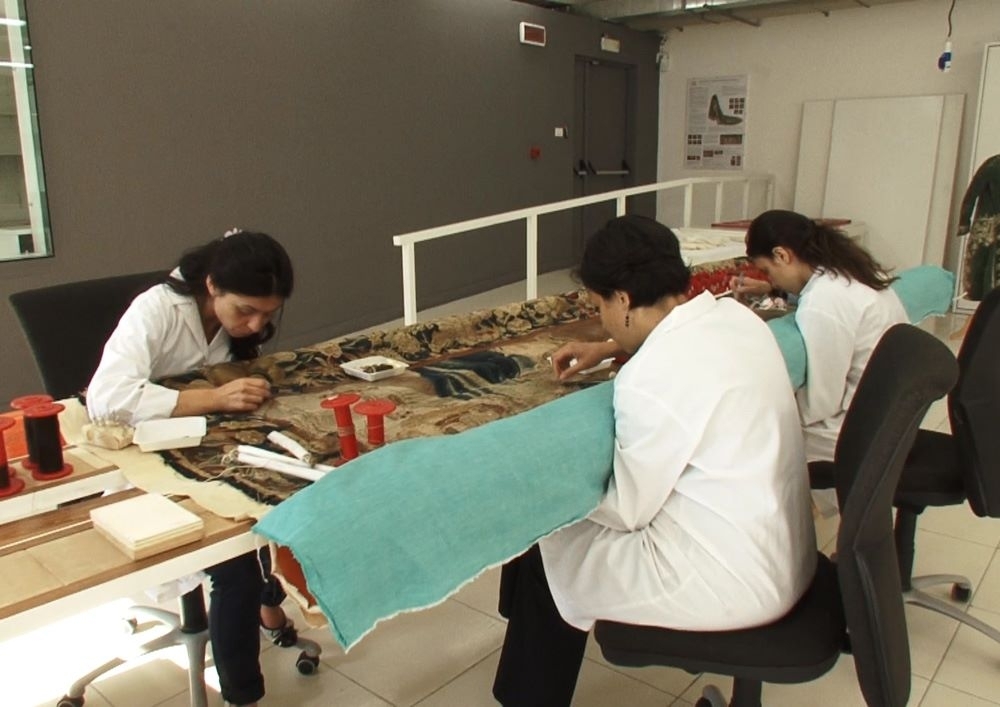
Open Care’s treatment, agreed with the Soprintendenza ai Beni Storici, Artistici ed Etnoantropologici (Superintendency for Historical, Artistic and Ethno-anthropological Heritage), was conservative in nature, but also included the reintegration of portions of figures to make the subject easier to understand. After careful washing, the restoration involved the consolidation by stitching of all the degraded areas onto linen supports applied to the back; the insertion of warps where they were completely missing; the integration of the wool weft in the figures of the central scene and of the silk weft in the extensive losses of the sky; the reweaving of the upper selvedge; the consolidation of the side and lower selvedges; and, finally, the application of the suspension system and of a rear lining made of linen fabric applied by stitching.
The tapestry was then rolled on a dedicated tube, carefully packed and transported by Open Care’s art logistics department, and installed in the exhibition. Once the exhibition ended, the work was displayed again with the other three tapestries of the Constantine series in the rooms of the Museo Diocesano, where it can be seen by the public today.
On the occasion of the exhibition, a documentary video about the tapestry, its history and the conservation treatment was also made at the CTU (Centro Televisivo Universitario, a cross-media narrative audiovisual production).